Across Europe’s cultural and creative sectors, data is everywhere: ticket sales, audience surveys, CRM systems, sensor data, social media analytics, collection databases. And yet, in many organisations, data remains underused, fragmented, and isolated. This is not a paradox, but a structural condition.
In experience-based sectors such as live music, festivals, theatre, and museums, data is rarely designed to travel. It is collected for immediate operational needs, stored in disconnected systems, and governed by institutional boundaries that make collaboration difficult. As a result, digital transformation often reinforces silos instead of dismantling them.
EXCENTRIC starts from a simple but disruptive insight: the problem is not a lack of data, but a lack of shared data practices.
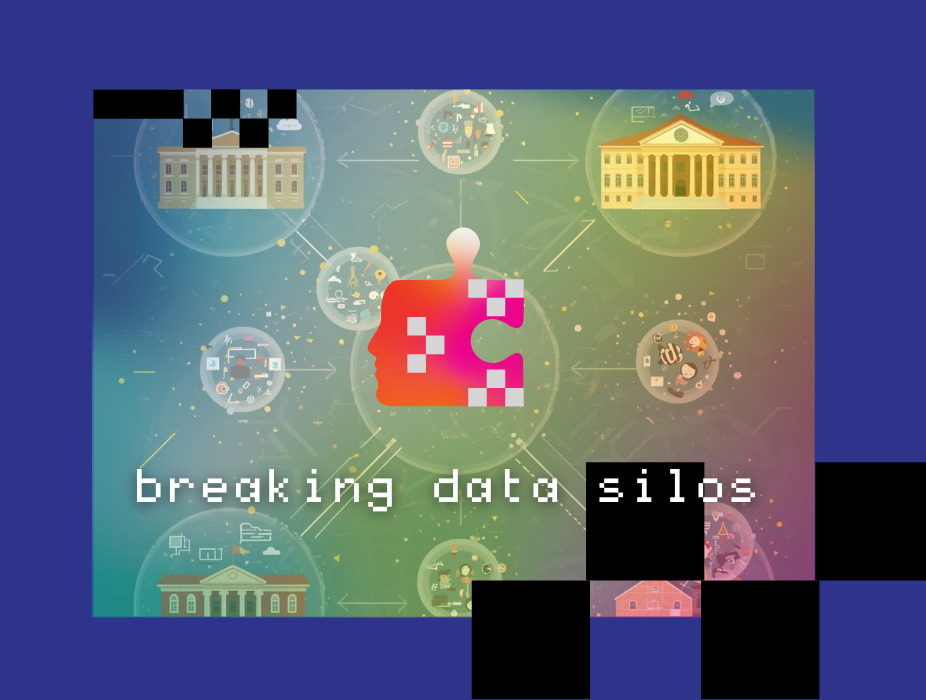
Cultural data lives in silos
Data silos in cultural organisations are not accidental. They emerge from long-standing realities:
-
Organisations rely on different software vendors and proprietary platforms
-
Data collection follows funding, reporting, or marketing requirements
-
Skills and resources for data work are unevenly distributed
-
Concerns about privacy, ownership, and misuse limit sharing
In experience sectors, these challenges are amplified by the intangible nature of cultural value. Unlike manufacturing or logistics, cultural outcomes are relational, emotional, and context-dependent (Throsby, 2001). This makes data harder to standardise – and easier to compartmentalise.
The result is a fragmented landscape where audience insight stops at organisational borders; programming decisions rely on partial evidence; and learning remains local, even when challenges are shared
Digital tools promise efficiency, but without coordination, they often deepen fragmentation.
When digital tools reinforce fragmentation
Many cultural organisations have invested in digitalisation over the past decade. CRMs, ticketing systems, analytics dashboards, and audience engagement tools are now common. Yet these tools are typically designed to optimise individual organisational performance, not collective learning.
This creates a familiar pattern:
-
Each organisation builds its own data infrastructure
-
Data formats and metrics are incompatible
-
Knowledge cannot be easily compared or reused
-
Sector-wide insight remains elusive
Research in digital governance shows that such fragmentation limits innovation and reduces public value, particularly in sectors where outcomes depend on coordination rather than competition.
To break data silos, EXCENTRIC introduces the concept of Collaborative Data Practices — an approach that shifts attention away from technology alone and towards how data is produced, shared, interpreted, and governed across organisations.
Crucially, collaboration here does not mean full openness or loss of control. It means purpose-driven sharing, guided by ethics and responsibility.
Human-centricity as a condition for data sharing
Breaking data silos is not only a technical challenge – it is a human one.
Cultural organisations are shaped by people: programmers, curators, producers, educators, technicians, and administrators. If data practices do not align with their needs, skills, and values, collaboration will fail — regardless of technical sophistication. EXCENTRIC applies human-centric principles by involving cultural professionals in the co-design of tools, exemplified by our pilot partners’ progress.
Studies on human-centric digital transformation consistently show that participation and capacity-building are decisive factors in successful adoption (Bødker & Kyng, 2018). In cultural sectors, where identity and mission matter deeply, this is even more critical.
Trust, ethics, and the limits of sharing
Data sharing in culture raises legitimate concerns:
-
Who benefits from shared data?
-
How is audience privacy protected?
-
Can data be misused for commercial or political ends?
Research on data commons and collective governance highlights that trust and legitimacy are preconditions for sustainable collaboration (Benkler, 2016). Without them, data ecosystems collapse into extractive models that undermine participation.
EXCENTRIC treats these concerns not as obstacles, but as design choices, because we know that breaking silos responsibly requires clear data governance frameworks, explicit ethical guidelines, transparency about use and limits, and ongoing negotiation between partners.
One of the project’s core innovations lies in its cross-sectoral scope. Live music, festivals, theatre, and museums differ significantly, and breaking data silos allows these sectors to learn from one another without erasing their differences. Shared practices enable comparison, reflection, and adaptation – not standardisation.
This cross-sector learning is essential for building resilience in Europe’s cultural and creative sectors, particularly in the face of economic pressure, technological change, and shifting audience expectations.
Data silos are hard to dismantle structurally, this is why EXCENTRIC’s ambition goes beyond technical solutions. By embedding collaborative data practices into organisational routines, skills, and governance models, the project aims to support long-term organisational learning and sustainable transformation beyond project funding.
References
-
Benkler, Y. (2016). Peer production and cooperation. In Handbook on the Economics of the Internet (pp. 91-119). Edward Elgar Publishing.
-
Bødker, S., & Kyng, M. (2018). Participatory design that matters—Facing the big issues. ACM Transactions on Computer-Human Interaction (TOCHI), 25(1), 1-31.
-
Klievink, B., Van Der Voort, H., & Veeneman, W. (2018). Creating value through data collaboratives: Balancing innovation and control. Information Polity, 23(4), 379-397.
-
Throsby, D. (2001). Economics and Culture. Cambridge University Press.
More Insights